
Electrical and Electronics Engineering
Electrical and Electronics Engineering
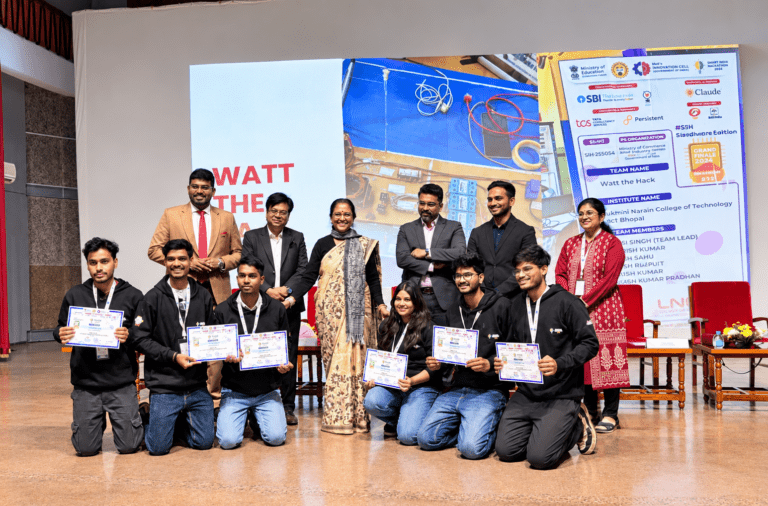
The department began its journey in 1994 as the Department of Electrical and Electronics Engineering with an intake of 60 students. Over the years, it has evolved into a vibrant centre of technology and learning. Today, the department offers B.Tech. programme in Electrical and Electronics Engineering with an intake of 120 students. These programmes provide students with a strong foundation in electrical engineering, electronics, power systems, electrical machines, power electronics, control systems, and advanced electrical technologies, while creating opportunities to specialize in emerging areas.
The department is supported by a team of highly qualified, experienced, and dedicated faculty members, representing diverse areas of specialization. Faculty members are actively engaged in teaching, research, consultancy, innovation, industry interaction, and professional development, thereby creating a rich academic environment that encourages students to learn, explore, innovate, and excel.
A significant milestone in the department’s journey has been its consistent commitment to quality assurance and academic excellence, as evidenced by NBA accreditation. The department has been accredited by the National Board of Accreditation four Times, reflecting its sustained efforts towards quality education, outcome-based learning, continuous improvement, industry relevance, and attainment of graduate attributes. This repeated accreditation is a testament to the department’s commitment to maintaining academic standards and providing students with education aligned with national and international expectations.
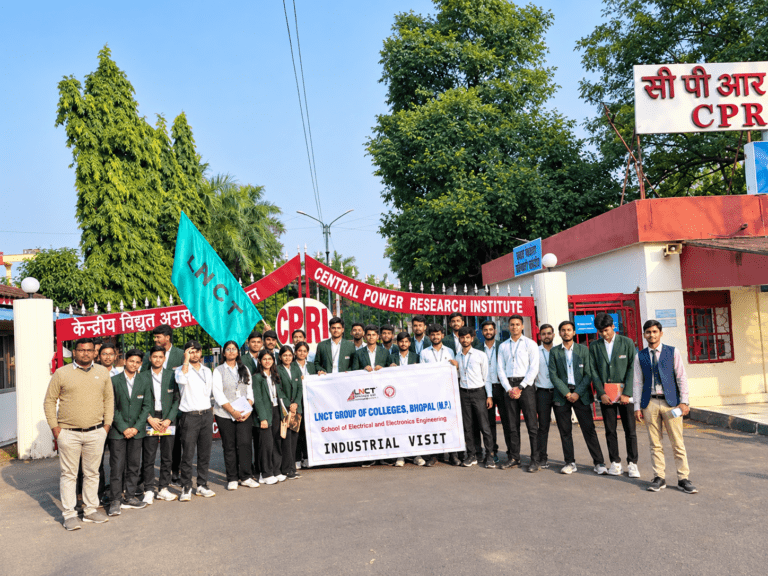
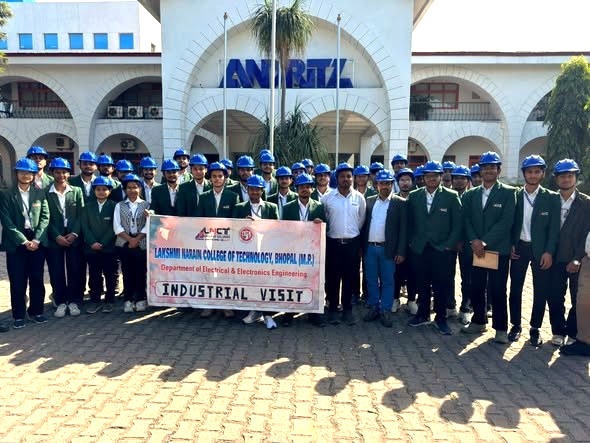
The department follows a student-centric, outcome-based education framework that integrates classroom teaching with experiential learning, laboratory practice, project-based learning, internships, industrial exposure, technical training, research, and innovation. Students are encouraged to participate in national and international competitions, hackathons, technical quizzes, design challenges, paper presentations, workshops, seminars, and professional development activities.
In keeping with the rapidly changing technological landscape, the department has expanded its academic and practical focus to include MATLAB, PSCAD, SciLab, LabVIEW, Artificial Intelligence and Machine Learning, Internet of Things, Smart Grids, Renewable Energy Systems, Electric Vehicles, Power Electronics and Drives, Industrial Automation, Control Systems, PLC-SCADA, High Voltage Engineering, Protection Systems, Power System Analysis, Electrical Machines, Embedded Systems, Robotics and Automation, and Smart Energy Systems.
The department is supported by 16 specialized laboratories equipped with contemporary hardware, development platforms, measuring instruments, electrical machines, power electronic systems, simulation tools, and industry-relevant software. These facilities provide students with opportunities to transform theoretical concepts into practical systems and prototypes and to develop solutions for real-world engineering challenges.
Research and innovation form an integral part of the department’s academic culture. Faculty members and students are encouraged to undertake sponsored research, industry-collaborative projects, consultancy, publications, intellectual property development, technology demonstrations, and interdisciplinary research. The department promotes research in renewable energy systems, smart grids, power electronics, intelligent control systems, electric mobility, AI-enabled power systems, energy management, and other emerging areas.
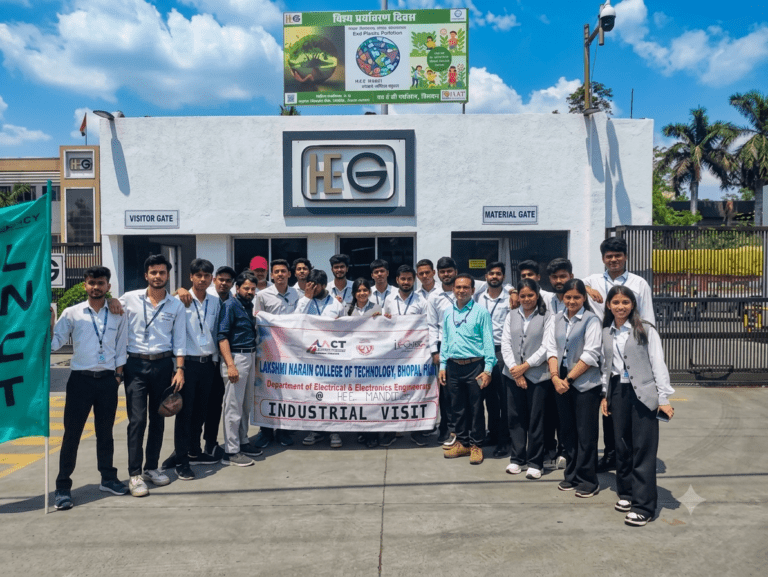
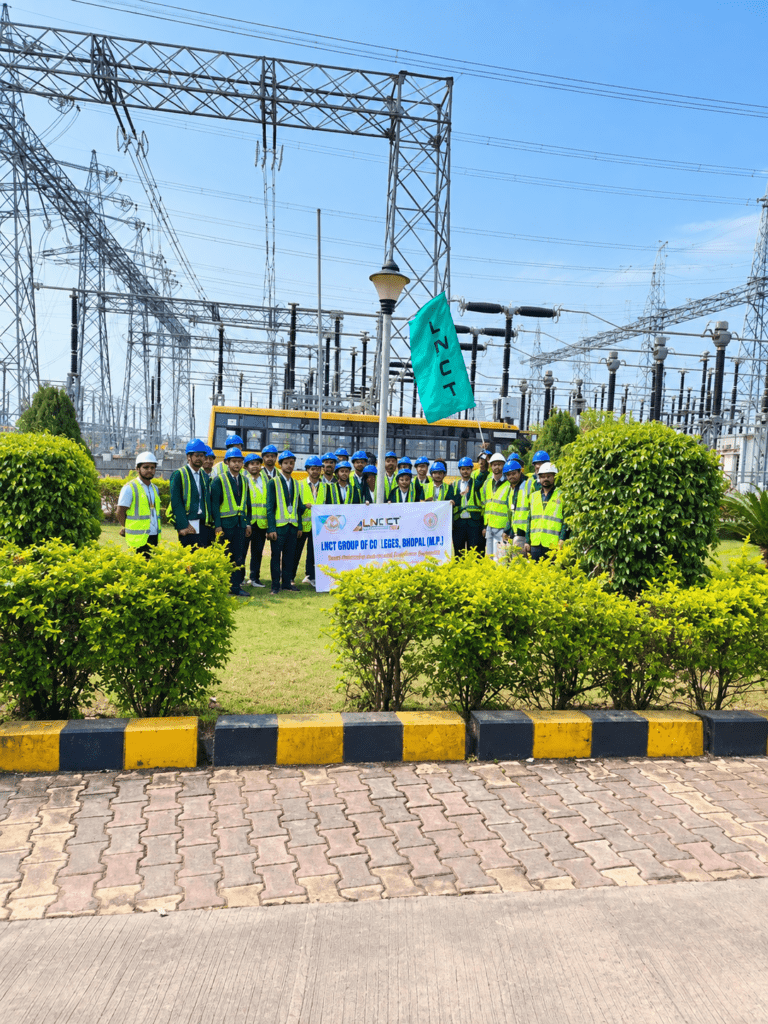
The department also places strong emphasis on industry-academia collaboration through MoUs, internships, industrial visits, expert lectures, skill-development programmes, industry projects, and consultancy activities. These initiatives enable students to understand industrial practices and develop the technical, professional, and interpersonal skills required to succeed in a competitive global environment.
The overarching objective of the department is to foster the holistic development of every student by providing a conducive learning environment that combines academic rigour with innovation, research, professional ethics, leadership, entrepreneurship, and social responsibility.
With its strong academic foundation, continuously evolving technological ecosystem, qualified faculty, modern laboratories, research orientation, industry engagement, and commitment to quality, the Department of Electrical and Electronics Engineering, LNCT Bhopal, is dedicated to creating engineers who are not only industry-ready but also capable of becoming innovators, researchers, entrepreneurs, technology leaders, and responsible citizens.
The department’s commitment is simple yet ambitious: to transform knowledge into innovation, innovation into impact, and students into professionals who can shape tomorrow’s technologies. The students’ editorial board also publishes a monthly departmental newsletter, which speaks about the quality and achievements of the students. Research assistance for paper presentation and travel grants for India and abroad are provided by LNCT and government agencies like MPCST, AICTE, DST etc.
B.Tech. (4 Years Duration)
| College Name | Lakshmi Narain College of Technology, Bhopal |
| Eligibility Criteria | Eligibility-XII with: Physics + Maths + (Chemistry/Computer Science/Biology) with Min. 45% (40% for SC/ST/OBC MP Domicile Candidate) with qualified rank in JEE. Eligibility (Direct/Lateral Entry)-2nd Year. Direct Admission: 1. Min. 45% (40% for SC/ST/OBC) in B.Sc. and passed 12th examination with Maths. 2. Min. 45% (40% for SC/ST/OBC) in Diploma in Engg. |
| Seats | 120 |
| Duration | 4 Years |
M.Tech. – Power Electronics
| College Name | Lakshmi Narain College of Technology, Bhopal |
| Eligibility Criteria | Eligibility-B.E./B.Tech. with Min. 50% (45% for SC/ST/OBC MP Domicile Candidate) |
| Seats | 30 Seats |
| Duration | 2 Years |
| College Name | Name |
| LNCT | Dr. Naveen Asati |
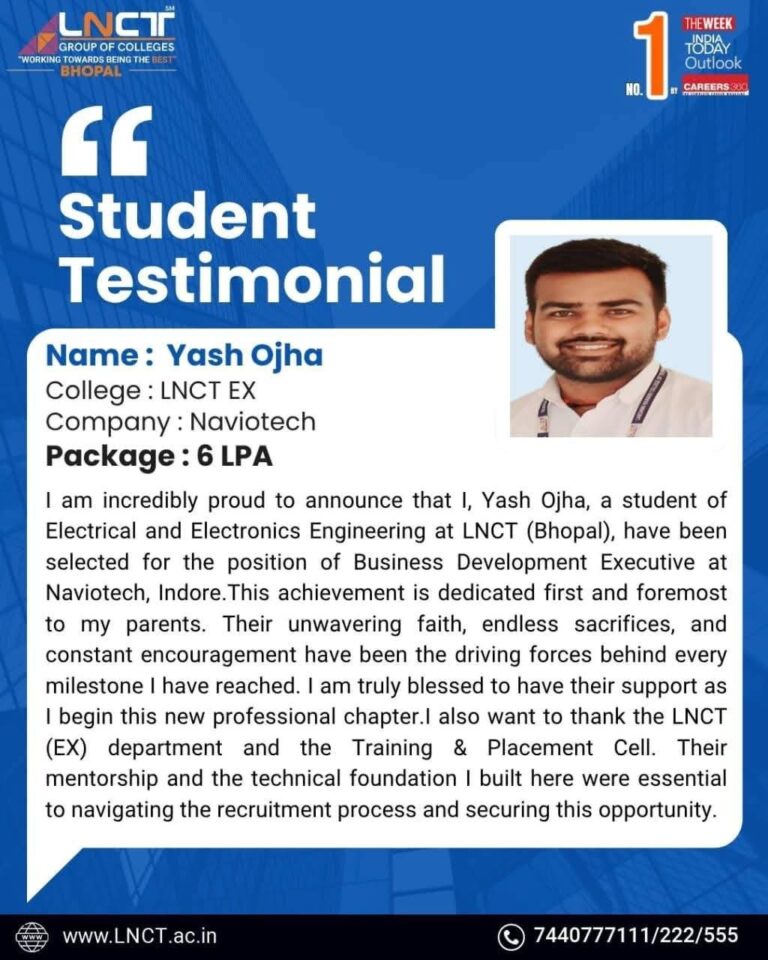
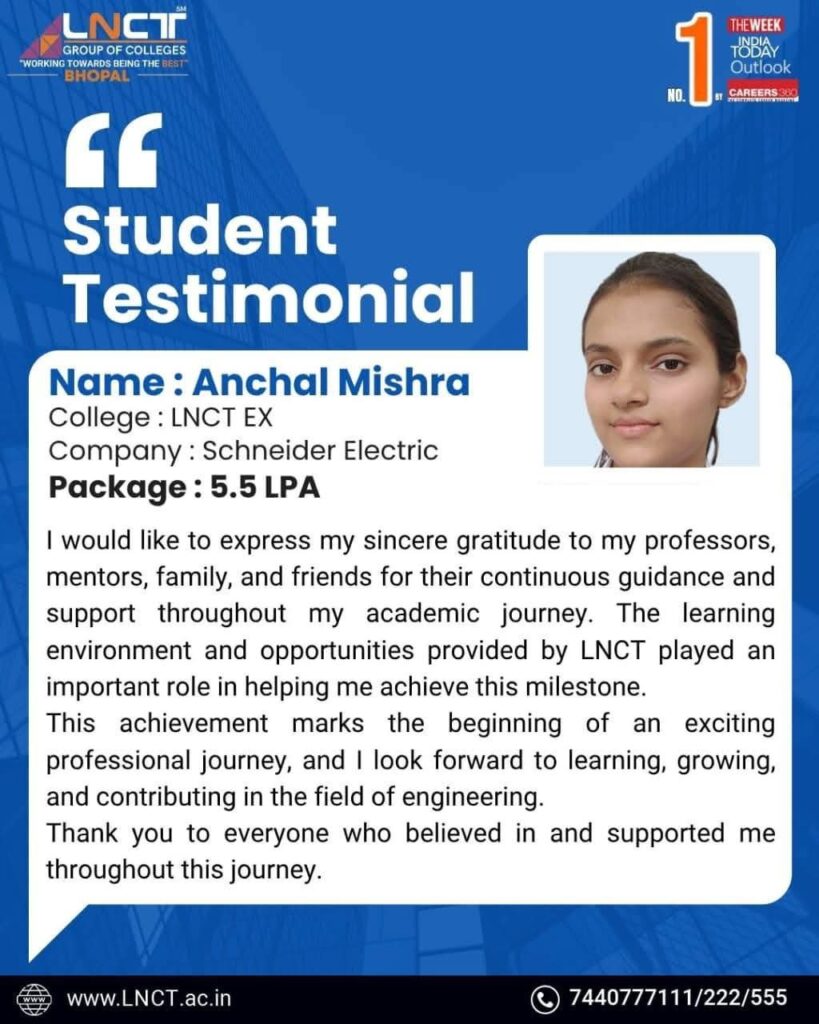
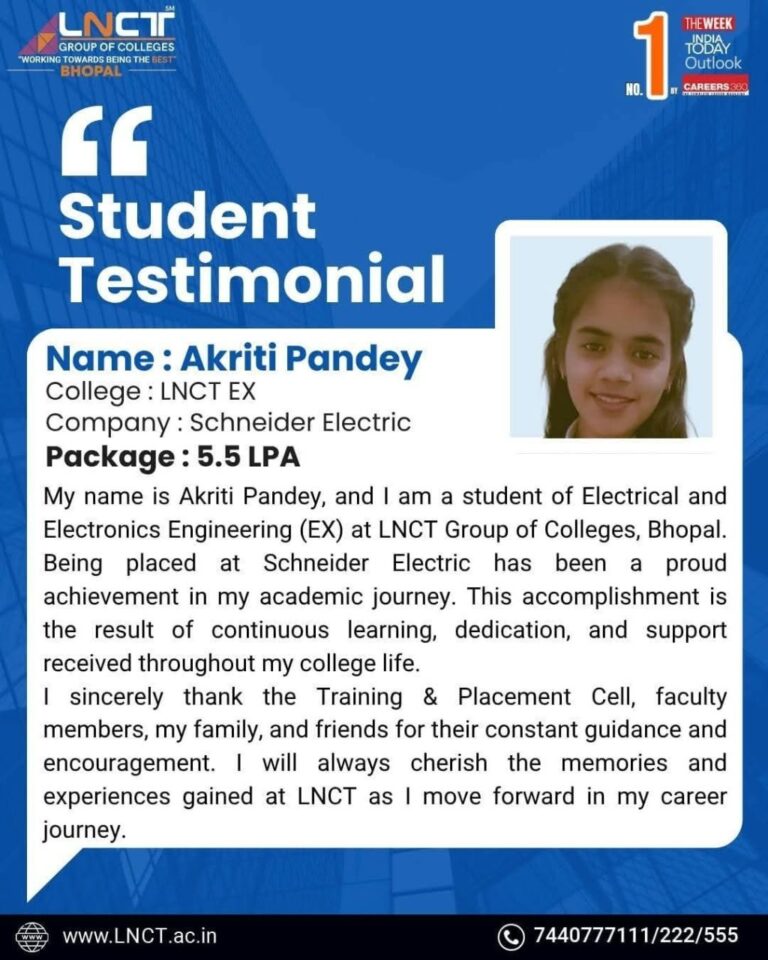
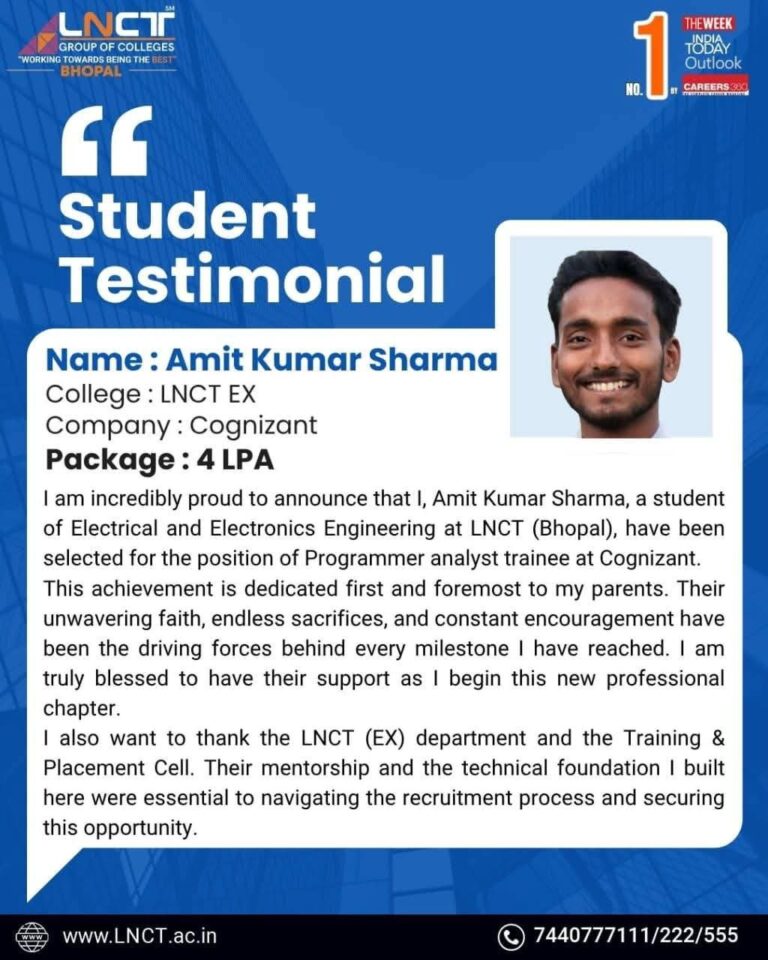
Alumni - Students Testimonial
Syllabus & Scheme
Departmental Activities
Faculty Achievements
Students Achievements
IPR Achievements
Hackathon & Other Competition
Newsletter
Social Responsibility
Vision
To impart knowledge of electrical and electronics engineering and mould students into world class professional to achieve excellence in engineering education
Mission
To impart quality education in Electrical and Electronics Engineering by providing strong theoretical and practical exposure to global standards.
To nurture competent engineers with ethical values, leadership skills and a commitment to lifelong learning, enabling them to serve society responsibly.
To promote research, innovation consultancy and industry collaboration for technological advancement and sustainable development.
To create an environment that encourages creativity, entrepreneurship and professional excellence in the field of Electrical and Electronics Engineering.
Program Specific Outcomes (PSOs)
| PSO-1 | Develop the ability to model, analyze, test and design using modern software and programming tools in the field of Electrical and Electronics engineering. |
| PSO-2 | Capability to solve complex engineering problems in modern electrical and Electronics applications professionally to provide efficient and socially acceptable technical solution. |
| PSO-3 | Apply project management techniques and computational skills to manage multidisciplinary such as green energy, AI tools etc. while adhering to professional ethics and environmental standards for sustainable industrial development. |
Program Educational Objectives (PEOs)
| PEO-1 | Graduates will demonstrate the ability to apply fundamental knowledge of mathematics, science and engineering to identify, analyze and design innovative solutions for real world problems in Electrical and Electronics Engineering as demand of industry and society. |
| PEO-2 | Graduate will develop the ability to design and implement efficient, cost effective and sustainable computing and electrical systems, using appropriate methodologies to meet the evolving technological demands of present scenario for society. |
| PEO-3 | Graduate will be proficient in using modern engineering tools, software and techniques to solve complex engineering problems in a global, economic, environmental and social context. |
| PEO-4 | Graduates will exhibits professionalism, ethical behavior and an understanding of the economic implications of their engineering solutions. Their well communication and team work, preparing them to take leadership quality in the practice of Electrical and Electronics Engineering. |